
For Michael, an Adelaide recreational tennis player, the frustration had become routine. Every time he walked onto the court, his heel pain returned. He had tried resting, stretching, changing footwear and modifying his activity. The pain would improve temporarily, only to return when he resumed normal life.
Months passed.
The problem wasn’t necessarily that Michael needed to try harder. It was that his persistent condition needed a different understanding. After assessment, his physiotherapist considered whether shockwave therapy could form part of a broader rehabilitation strategy designed for his specific condition.
His story represents a common turning point in chronic musculoskeletal rehabilitation: recognising that a persistent injury may not respond to the same approach as a recent one.
For Adelaide residents dealing with stubborn tendon or soft-tissue problems, that shift in thinking can be crucial.
When Rest Stops Being the Complete Answer
Acute injuries and persistent conditions don’t always behave the same way.
If you twist an ankle on a weekend hike in the Adelaide Hills, the initial priorities may include protecting the area, managing symptoms and gradually restoring movement. But some conditions persist long after the original irritation should have settled.
This is where simply repeating the same strategy can become frustrating.
● The pain keeps returning: Symptoms improve during periods of rest but reappear as soon as normal activity resumes.
● The original injury has become chronic: The condition may now involve longer-term changes in the affected tissues rather than simply an acute inflammatory response.
● Treatment needs to match the condition: A persistent tendon problem may require a different rehabilitation strategy from a recently injured muscle.
For Michael, repeatedly stopping tennis whenever his symptoms became uncomfortable wasn’t solving the underlying problem. It created a cycle: activity, pain, rest, temporary improvement, and then pain again.
That doesn’t mean rest was useless. It simply wasn’t the entire solution.
The next step was to determine why the problem persisted and whether the treatment approach needed to change.
The Point Where the Treatment Strategy Changes
One of the most important aspects of rehabilitation is understanding that no single treatment works for every injury or every patient.
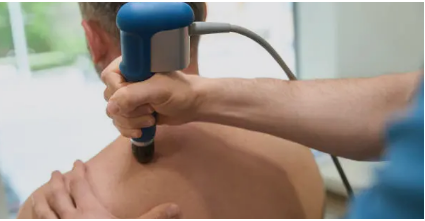
After a thorough assessment, a clinician may determine that a persistent tendon or soft-tissue condition could be appropriate for shockwave therapy as part of a broader chronic pain management plan. The treatment uses acoustic waves directed toward a targeted area to stimulate a biological response in the treated tissue.
But the keyword is appropriate.
● Diagnosis comes first: Persistent pain should be properly assessed rather than automatically treated with any particular modality.
● The treatment is targeted: Shockwave treatment is delivered to specific areas and settings according to the condition and clinical assessment.
● Rehabilitation still matters: Strengthening, load management, movement retraining and gradual return to activity may remain important parts of recovery.
This distinction is important because shockwave treatment isn’t a magic button you can press until an injury disappears.
For Michael, the value came from changing the overall strategy. Instead of repeatedly waiting for symptoms to settle before returning to tennis, his rehabilitation could address the condition more comprehensively.
Why Chronic Injuries Can Require a Different Mindset
Persistent injuries can be psychologically exhausting. After months of discomfort, people often become focused on finding the one treatment that will finally “fix” them.
But recovery is rarely that simple.
A chronic tendon problem, for example, may require carefully managed loading over time. The objective isn’t necessarily to avoid all discomfort forever. It’s to progressively improve the tissue’s capacity to tolerate the demands placed upon it.
● Load must be managed: Doing too much too soon can aggravate symptoms, while doing too little may fail to build capacity.
● Progress needs to be gradual: Returning to running, tennis or gym training should reflect the individual’s tolerance and rehabilitation progress.
● The whole person matters: Work demands, sleep, activity levels, footwear, training habits and previous injuries can all influence recovery.
This is where shockwave therapy may fit into a broader rehabilitation program for suitable patients. Rather than treating it as a standalone solution, clinicians can use it alongside strategies intended to progressively restore function.
For an Adelaide resident who wants to return to running along the River Torrens, playing weekend sport or simply walking comfortably around the neighbourhood, the ultimate goal isn’t merely reducing pain in the clinic. It’s rebuilding the capacity to live normally outside it.
The Real Breakthrough Wasn’t a New Treatment—It Was a New Question
Michael’s biggest breakthrough came when he stopped asking, “What can I do to make this pain disappear today?”
Instead, he started asking, “Why does this problem keep returning, and what does my body need to handle normal activity again?”
That change in perspective can be significant.
Persistent pain deserves a careful assessment rather than an endless cycle of trial and error. If a condition has continued despite reasonable attempts at rest, exercise or other conservative approaches, it may be time to reassess the diagnosis and treatment strategy.
● Look for the underlying pattern: When does the pain appear, what makes it worse, and what activities can you tolerate?
● Assess the whole rehabilitation picture: Consider strength, mobility, biomechanics, activity levels and load tolerance.
● Use appropriate treatments strategically: If a clinician recommends a modality such as shockwave treatment, understand how it fits into your overall recovery plan.
For people across Adelaide, this approach can help shift rehabilitation from simply managing recurring symptoms toward addressing the factors that may be keeping the problem going.
Conclusion: Stop Treating a Persistent Problem Like a Temporary One
Michael didn’t need another cycle of playing tennis, experiencing pain, resting and starting over. He needed a better understanding of why his condition had persisted and a rehabilitation strategy built around that reality.
That is the broader lesson for anyone dealing with a stubborn injury: when the same approach repeatedly produces the same result, it may be time to change the question—not simply repeat the treatment.
If you’ve been dealing with persistent tendon or soft-tissue pain in Adelaide, don’t assume you need more rest or more patience. Arrange an assessment with a qualified physiotherapist or appropriate healthcare professional to determine what’s actually driving your symptoms and whether treatments such as shockwave therapy are suitable for your specific condition.
Your next step isn’t to find the fastest treatment. It’s to get the right diagnosis, understand why your injury isn’t resolving and build a personalised plan that helps your body return to the activities that matter to you.